It's a question that comes up a lot, usually when a homeowner is trying to work out whether a problem they've noticed is an isolated repair or a sign that the whole roof is reaching the end of its useful life. There's no single answer, because lifespan depends heavily on the material used, how well the roof was originally installed, and how exposed the property is to the local weather. Knowing roughly where your own roof sits within that picture makes it much easier to plan ahead rather than being caught out by an unexpected problem.
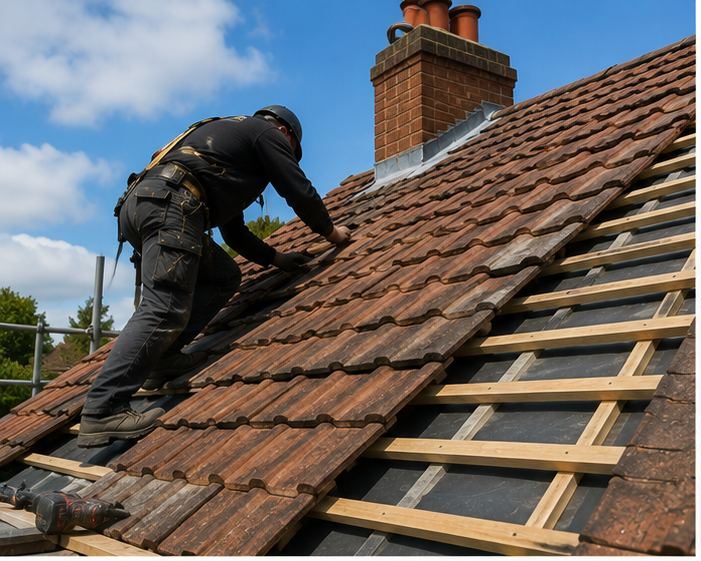
Tiled roofs, which are common across Port Talbot and much of South Wales, tend to be fairly long-lasting when properly maintained, often serving a property well for several decades before significant work is needed. Slate roofs, still found on plenty of older properties in the area, often last even longer than tiled roofs when the slates themselves are in good condition, although the fixings and underlay beneath will usually need attention sooner than the slates do.
Flat and EPDM roofing generally has a shorter lifespan than pitched tiled or slate roofs, and tends to need renewing sooner, particularly on flat roof sections exposed to standing water or heavy weathering. That doesn't make it a poor choice — it has its place, especially on extensions and outbuildings — but it's worth budgeting for renewal earlier than you might for a traditional pitched roof. Individual components tend to have their own timelines too, so guttering, fascias and soffits, or the flashing around a chimney stack, can all need attention well before the main roof covering itself is due for replacement.
A roof's actual lifespan is never just about the material, though. How well it was installed originally, whether the underlay and battens beneath the visible covering are in good condition, and how exposed the property is to South Wales weather all play a significant part. A roof facing the prevailing wind and rain off the coast will generally show wear sooner than a similar roof in a more sheltered position, even if both were installed at the same time with the same materials.
Regular maintenance makes a real difference too. Clearing moss, keeping guttering free-flowing, and dealing with small issues like a slipped tile or minor flashing damage promptly all help a roof reach the upper end of its potential lifespan, rather than deteriorating faster than it should because minor problems were left to worsen over time. A roof that's been neglected for years, even one made from long-lasting materials, will often show its age sooner than one that's had consistent, modest upkeep.
If you're not sure how much life is left in your roof, the best way to find out is to have it properly inspected rather than guessing based on its age alone. T & T Roofing South Wales provides free, no-obligation inspections for homes across Port Talbot and South Wales — call or WhatsApp 07766 547309 to arrange one.
Need a Roofer in South Wales?
Every roof is different — the fastest way to get an accurate answer is a quick chat with our team.