Moss on a roof can look quite natural, and some people leave it alone. But on most roofs, heavy moss is worth dealing with, because it does more than spoil the look of the house.
Why moss grows
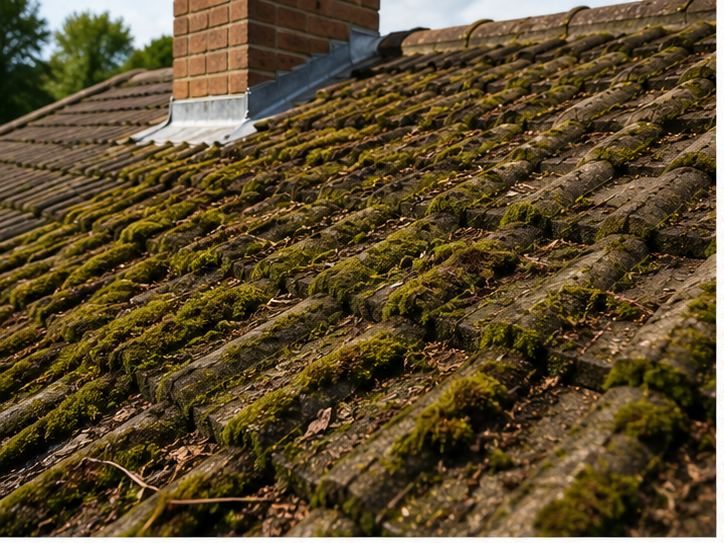
Moss thrives where it is damp and shaded. North-facing slopes, roofs under trees and roofs that stay wet after rain are the most likely to grow it. South Wales has a damp climate, which suits moss well, and once it takes hold, it spreads.
How it causes problems
Moss acts like a sponge and holds water against the roof covering. On tiles, this keeps the surface wet, and in cold weather the trapped water can freeze, which can damage the surface of the tile. Thick moss can also block the gaps between tiles and push them out of place, and it can clog gutters when pieces fall off. In valleys, moss can slow the flow of water and lead to overflow.
When it matters most
A light covering on a sound roof is usually just cosmetic. A thick covering, particularly on older or porous tiles, is more worrying. If you can see that moss is lifting tiles, filling valleys or washing into gutters, it is time to have it cleared.
Clean carefully
Moss is usually removed by hand or with brushes, followed by a treatment to slow regrowth. Harsh pressure washing can damage the tile surface and drive water under the tiles, so it is generally best avoided.
Check the roof underneath
Removal is a good chance to spot damaged tiles, cracked ridge bedding and worn flashings, which can then be repaired.
See our Roof Moss Removal section or call 07766 547309 for a free quotation.
Need a Roofer in South Wales?
Every roof is different — the fastest way to get an accurate answer is a quick chat with our team.