Homes across Port Talbot come in a real mix of styles and ages, from Victorian terraces to more modern estates, and the roofing material sitting above each one plays a big part in how well it copes with the local climate. There is no single "best" material for every property. The right choice depends on the age and style of the house, the pitch of the roof, and what you are hoping to achieve, whether that is matching the existing streetscape or improving long-term durability. Planning restrictions in some areas can also influence what is appropriate, so it is worth checking before assuming any material is automatically an option.
Natural slate remains a popular choice on older properties throughout South Wales, valued for its traditional appearance and long service life when properly maintained. It is a material well suited to withstanding the wind and rain that coastal areas see regularly, though slate roofs do need periodic checking for slipped or cracked slates, particularly on older roofs where the fixings may have weakened over time. Reclaimed or matching slate can also be sourced for repairs on period properties where appearance matters as much as performance.
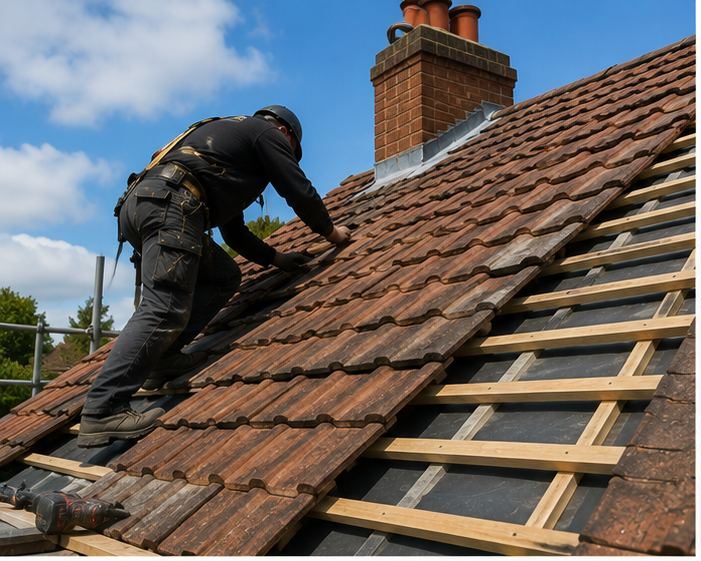
Concrete and clay tiles are widely used on more modern housing, offering a good balance of durability, appearance and cost. Clay tends to hold its colour well over the decades, while concrete is often chosen for its lower upfront cost and wide range of profiles and colours designed to suit different house styles. Both perform well when installed correctly with appropriate underlay and battens beneath them, and both are readily available, which makes future repairs or partial replacements more straightforward than with some less common materials.
For flat roof sections, common on extensions, garages and dormer areas rather than whole houses, EPDM rubber roofing has become a popular option in recent years, prized for being relatively low-maintenance and durable compared with older felt systems. It is worth discussing flat roof coverings separately from your main pitched roof, since the demands placed on a flat roof, particularly around drainage and pooling water, are quite different from a sloped, tiled surface.
When weighing up materials, it is worth thinking beyond the initial cost. Some materials require more regular maintenance than others, some are easier to source matching replacement parts for years down the line, and some simply suit certain roof pitches or house styles better than others. A roofer who knows the types of property common across Port Talbot and South Wales more broadly can talk through what is realistic and sensible for your specific roof, rather than pushing whichever product happens to be easiest for them to install.
If you are planning a re-roof or replacement and are not sure which material makes the most sense for your home, T & T Roofing South Wales can talk you through the options during a free, no-obligation site visit and quote.
Need a Roofer in South Wales?
Every roof is different — the fastest way to get an accurate answer is a quick chat with our team.