The flat expanse of an EPDM roof is the easy part. The real skill is at the edges, where the roof meets walls, drips into gutters or finishes at a corner. That is where most flat roofs start to fail.
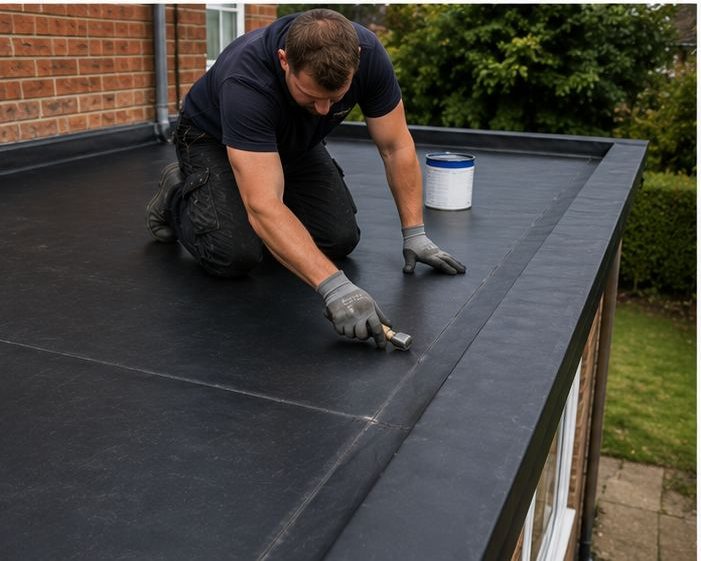
What an upstand is
Where the roof meets a wall, the membrane is turned up the wall as an upstand, and then covered by flashing or sealed with a trim. This stops water from running between the wall and the roof. The membrane is bonded carefully so there are no gaps.
Edge trims
At the roof edge, a metal or UPVC drip trim holds the membrane down and directs water into the gutter. If the trim is poorly fixed or lets water behind it, the edge can lift in the wind or let water run back under the membrane. Strong fixings and neat finishing matter.
Corners
Corners are formed with pre-shaped pieces or folded and sealed carefully. A poor corner is a common leak point, because there are more layers and more movement.
Penetrations
Pipes, vents, rooflights and outlets are cut through the membrane and sealed with purpose-made flashings. Each of these is another small risk, and doing them properly takes time.
Why it matters
Wind tries to lift roof edges, and rain tests every joint. Fine detailing at these points is what separates a lasting roof from one that fails early, so it is worth asking how the edges and upstands will be done when you compare quotations.
Look at the existing roof
If your old roof leaks near the edges or the wall, the detailing, not the surface, may be the problem.
See our EPDM Rubber Roofing section or call 07766 547309.
Need a Roofer in South Wales?
Every roof is different — the fastest way to get an accurate answer is a quick chat with our team.