Damp and water ingress are among the most common issues roofers are called out to investigate on homes across Port Talbot, and the causes are rarely as simple as the roof just being old. More often it is a combination of small, gradual failures that build up over time until moisture finally finds its way inside, sometimes travelling a fair distance from the actual point of entry before it becomes visible as a stain or patch of mould.
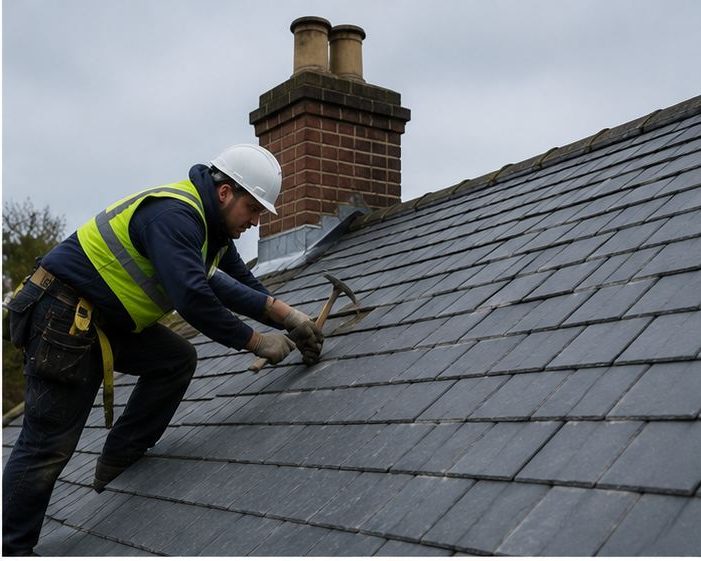
One of the most frequent culprits is damaged or ageing flashing, the metal or lead strips used to seal joints around chimney stacks, valleys and where a roof meets a wall. Flashing can crack, lift, or come away from its fixings over the years, particularly in areas exposed to strong coastal winds, creating a gap that lets rain track down into the roof structure long before anyone notices a stain on the ceiling below. Because these gaps are often small, they can go unnoticed for months even while doing steady damage.
Blocked or damaged guttering is another common cause, especially in autumn when leaves and debris build up quickly. When water cannot drain away properly it can overflow and run back under roof edges or down external walls, eventually finding its way into the building. A build-up of moss on tiles can have a similar effect, holding moisture against the roof surface for longer than it should sit there and gradually degrading the tiles beneath, which over time can allow water through even where none of the tiles are actually broken.
Poor loft ventilation is a less obvious but equally common contributor to damp problems. Moisture generated inside the home, from cooking, showering and everyday living, needs somewhere to escape. Without adequate airflow through the roof void, this moisture can condense on cold surfaces such as rafters and the underside of the roof covering, leading to damp patches, mould and rotting timber that has nothing to do with rain getting in from outside at all. This type of damp is often mistaken for a leak, when in fact the fix has more to do with airflow than with the roof covering itself.
Ageing roof underlay is another factor worth mentioning, particularly on older properties across South Wales where original felt has become brittle or torn over decades of use. Underlay acts as a secondary barrier beneath the tiles or slates, and once it starts to fail, even small gaps in the tiling above can let water through more easily than they would on a roof with sound underlay in good condition.
Because damp problems can stem from several different causes at once, getting to the bottom of one usually means a proper roof inspection rather than guesswork. T & T Roofing South Wales offers free inspections for homeowners across Port Talbot who are noticing damp patches, musty smells, or staining and want to understand what is actually causing it.
Need a Roofer in South Wales?
Every roof is different — the fastest way to get an accurate answer is a quick chat with our team.