A stain on the ceiling or a drip in the loft tells you there is a leak, but it rarely tells you where the water is getting in. Water can run along rafters, felt and insulation for some distance before it appears, so the damp patch you see may be well away from the actual fault.
Start from the inside
In the loft, look at the underside of the roof with a torch on a dry day. Dark staining, damp insulation or wet timbers show where water has been travelling. Follow the marks upwards and along the rafters towards the highest point of the damp, because the source will be above and often to one side of where it drips.
The usual suspects
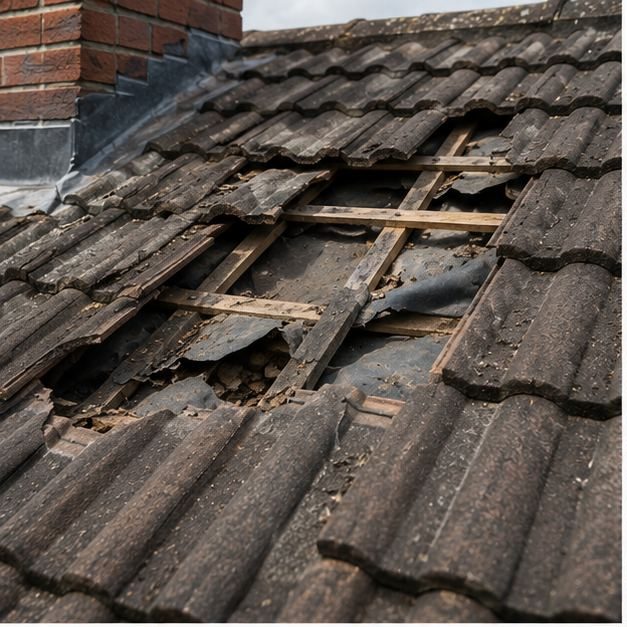
Most leaks start at a small number of places. Slipped, cracked or missing tiles and slates let water through the main covering. Flashings around chimneys, dormers and walls can lift or crack. Valleys, where two slopes meet, collect a lot of water and can fail. Ridge and hip tiles can lose their bedding. Blocked or broken gutters can also push water back under the edge of the roof.
Outside, safely
You can look at the roof from the ground with binoculars, checking for slipped tiles, damaged ridges and gaps around flashings. Do not climb onto a roof yourself. Roofs are slippery, and falls from roofs are serious accidents. It is much safer to have a roofer inspect it.
Why a proper inspection helps
A roofer who traces the leak properly can often fix a small fault, such as a few slipped tiles or a cracked flashing, rather than replacing large parts of the roof. Guessing and patching the wrong spot wastes money and lets damp carry on spreading. We look at the loft and the roof together, and tell you honestly what the problem is.
If you have a leak, see our Roof Repairs section or call 07766 547309 for a free quotation.
Need a Roofer in South Wales?
Every roof is different — the fastest way to get an accurate answer is a quick chat with our team.