Flashing is the strip of waterproof material, usually lead, that seals the joins between a roof and anything that sticks up through it or rises beside it. It is one of the most common places for a roof to leak, because these joints take the most movement and weather.
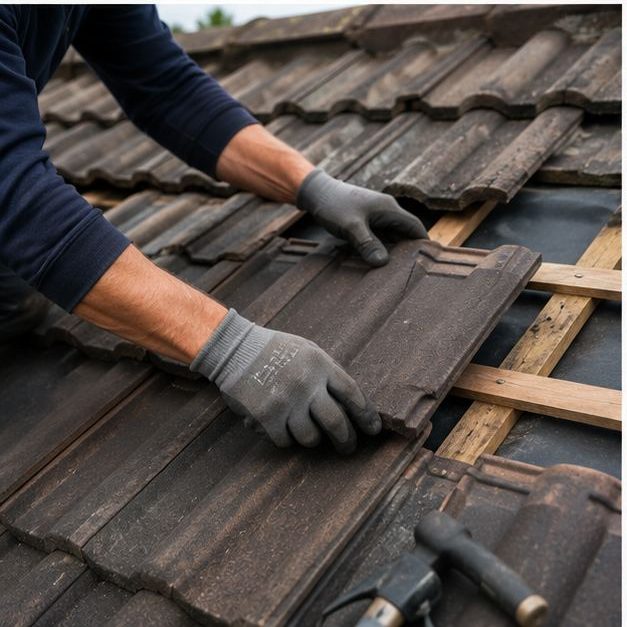
Where flashing is used
You will find flashing around chimney stacks, where a roof meets a wall, around dormer windows and rooflights, and in valleys where two slopes meet. At each of these places the roof covering stops and something else begins, and the flashing bridges the gap so water runs over it and away.
Why flashing fails
Lead is long-lasting, but it expands and contracts as temperatures change and can crack over time. The mortar that holds the top edge of a flashing into a brick wall can crumble, letting water get behind it. Strong wind can lift loose edges, and old bitumen or sealant repairs tend to dry out and split. Flashings that were poorly fitted in the first place often fail early.
Repairing flashing
A small gap may be re-pointed or re-dressed. A damaged section can be replaced. Where flashing is old, cracked or patched many times, renewing it properly is usually better value than another temporary fix. A good repair involves fitting the flashing into the wall or stack correctly and making sure the lap over the roof covering is large enough to shed water.
Why not just use sealant?
Sealant or mastic can stop a drip for a short time, but it is not a lasting answer on most flashings. It dries, shrinks and cracks. We would rather explain what is needed than seal over a problem and let it return.
If you think flashing is leaking, see our Roof Repairs section or call 07766 547309 for a free quotation.
Need a Roofer in South Wales?
Every roof is different — the fastest way to get an accurate answer is a quick chat with our team.