UPVC is low maintenance, but low maintenance does not mean no maintenance. A little cleaning every year keeps white boards looking fresh and spots problems early.
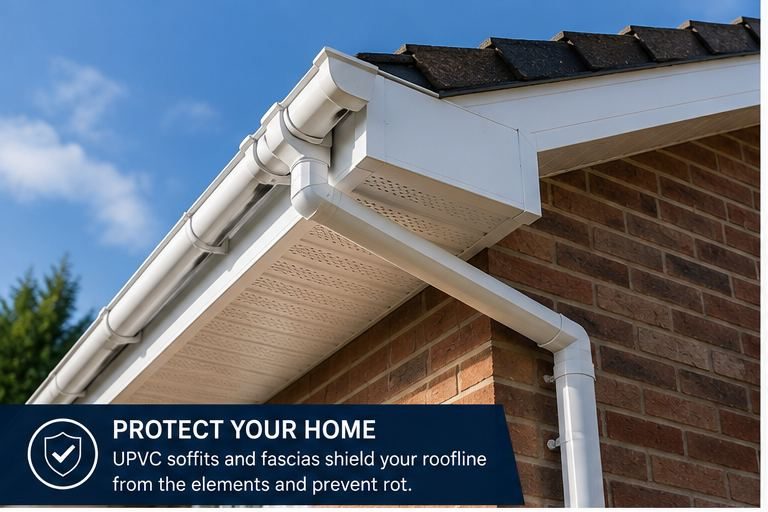
Cleaning
Use warm water with a little washing-up liquid and a soft cloth or sponge, then rinse with clean water. A soft brush on a pole can help reach higher boards from the ground. Do this once or twice a year, and after a wet winter when green algae can build up. Do not climb a ladder to clean boards if you are not confident working at height, because falls are a real risk.
What to avoid
Avoid abrasive cleaners, scouring pads and solvents, which can scratch or dull the surface. Pressure washers can force water into joints and damage seals, so they should be used with care, if at all. Do not use harsh chemicals that could cause staining.
Checking as you clean
While you are looking at the boards, check for cracks, gaps at the corners, loose or missing fixings, warped sections and signs of birds or insects getting in. Look at the gutters above for leaks and stains. If a joint has opened, rain can get behind the boards and into the timber beneath.
When cleaning is not enough
Yellowing, brittleness and heavy fading are signs an old board is reaching the end of its life. A crack that lets water in should not be ignored. Replacing a few boards may be possible, though matching colour on older boards can be hard. Where the boards are tired all round, replacing the full run gives a uniform finish.
Keep an eye on the timber behind
UPVC covers the timber behind it. If you see staining or a damp smell, have it checked.
See our UPVC Soffit and Fascia section or call 07766 547309.
Need a Roofer in South Wales?
Every roof is different — the fastest way to get an accurate answer is a quick chat with our team.