When fascias and soffits need replacing, the first choice is between UPVC and timber. Both can work well. The better option depends on the house, your budget and how much maintenance you are prepared to do.
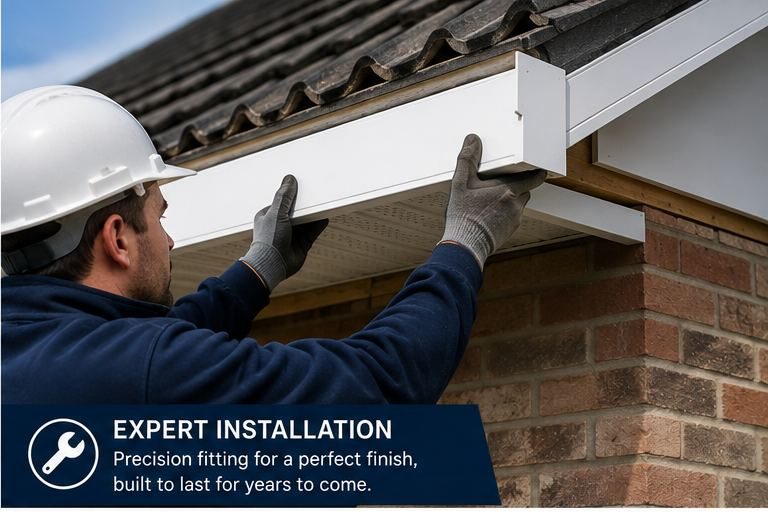
UPVC
UPVC does not rot and does not need painting, which is the main reason it is so popular. It is easy to clean with a damp cloth, comes in white and a range of colours and woodgrain finishes, and is manufactured in boards, soffit panels and trims that fit together neatly. It usually needs less upkeep over the years, which suits busy homeowners.
Timber
Timber looks traditional and can be a good match for older properties, particularly those in conservation areas or with period features. It can be shaped and cut to fit unusual profiles. But timber must be painted or treated regularly, and in wet climates like South Wales the finish can fail and let moisture in. Neglected timber rots.
Appearance
White UPVC is the common choice, but darker colours and woodgrain finishes are available if you want a different look. Over time, white UPVC can discolour and may need a clean, while cheaper plastics can become brittle or fade.
Ventilation and fit
Whichever material you choose, ventilation to the roof space should be kept. Vented soffits or small eaves vents let air move through the loft, which stops condensation. Fit and finish also matter: neat corner joints and fixings to sound timber are as important as the material.
Which should you choose?
For most houses, UPVC is the practical, low-maintenance option. For a period home with detailed woodwork, timber may be a better match. We can talk through both options during a free visit.
See our UPVC Soffit and Fascia section or call 07766 547309.
Need a Roofer in South Wales?
Every roof is different — the fastest way to get an accurate answer is a quick chat with our team.