The lead around the base of a chimney stack does a vital job, keeping rain from getting between the stack and the roof. Lead is a durable material, but it does not last forever, and chimney flashing is one of the first parts of a roof to need attention.
How long does lead last?
Lead can last many decades when properly fitted, and its lifespan depends on the quality of the work, the thickness of the lead and the exposure of the property. Where it fails early, the cause is usually poor installation, thin lead, lack of movement joints or damage from wind and ice rather than the metal simply wearing out.
Signs it is failing
Look for lifted or curling edges, cracks and splits, gaps between the lead and the brickwork, and patches of sealant or bitumen from earlier repairs. Inside, damp stains on the chimney breast or on the ceiling nearby can be a sign that water is getting past the flashing. A slight sag or a dent in the lead can also mean it has been walked on or stressed.
What a proper replacement involves
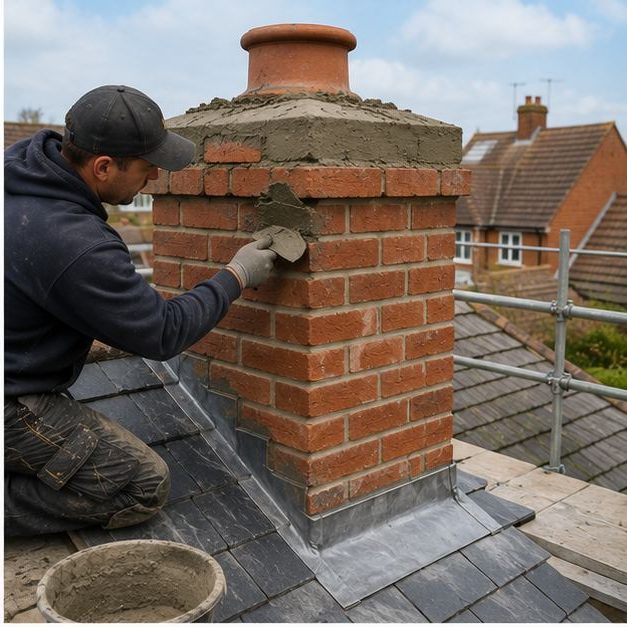
New flashing is made up from new lead sheet, cut and dressed to the shape of the stack. The upper edge is let into a chase cut in the brickwork and fixed with wedges and pointed. The lower edge laps over the roof covering so water runs away. Around the stack, separate pieces are used at the front, back and sides, each overlapping the next, with a tray or gutter at the back to carry water around.
Why not just re-seal?
Where flashing is sound but a small gap has opened, a local repair may do. Where the lead is cracked or worn, sealing over it only delays the problem. Doing it properly the first time usually works out better.
For chimney work, see our Chimney Repairs section or call 07766 547309.
Need a Roofer in South Wales?
Every roof is different — the fastest way to get an accurate answer is a quick chat with our team.