A damp patch on a chimney breast, sometimes with peeling paint or staining, is a common call for roofers. The cause is rarely the room itself. Water usually enters higher up, at the chimney stack or the roof around it, and then travels down inside the masonry.
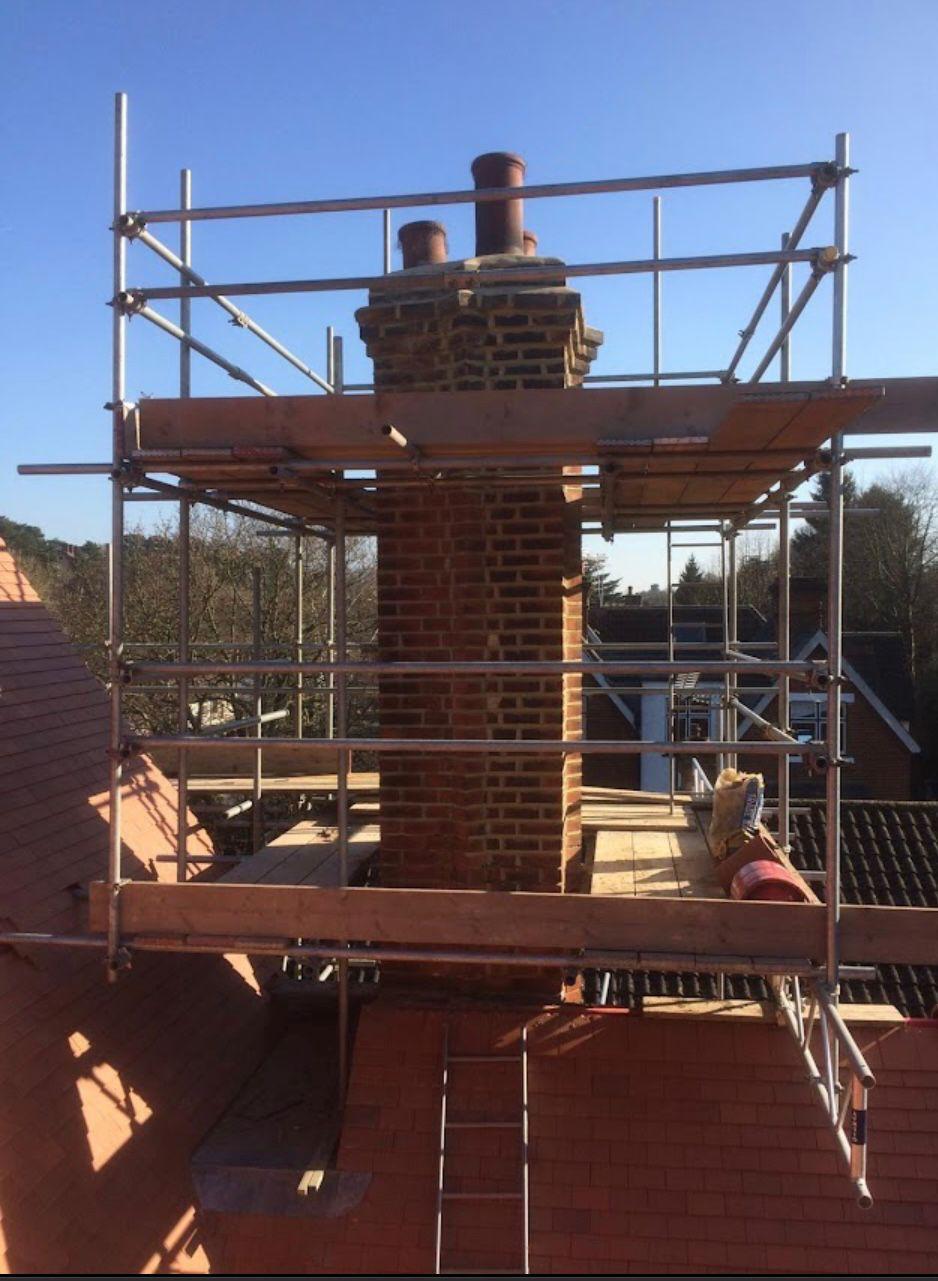
Flashing and lead work
The lead flashings where the stack meets the roof are the first thing to check. If they have lifted, cracked or been patched with sealant, rain can run behind them and into the structure. The top edge of a flashing is let into the brickwork, and when the mortar around it crumbles, a gap opens that lets water in.
Pointing and the stack itself
Brick stacks are exposed to wind and rain on every side. Over the years the mortar between the bricks can erode, and bricks can become porous or spalled. Water soaks into the stack and shows up as damp lower down. Re-pointing the stack, or in worse cases rebuilding part of it, restores its resistance to weather.
The top: pots, flaunching and cowls
The cement flaunching that holds the chimney pots in place can crack, letting rain run down the flue. An open, unused flue lets rain fall straight down. Capping the pot with a ventilated cap or a cowl keeps rain out while allowing air to move through the flue, which helps stop damp building up.
Condensation and unused flues
Not all damp comes from leaks. Unused flues that are sealed with no ventilation can build up condensation, which sometimes shows as brown staining on the chimney breast. A roofer or a chimney specialist can tell the difference.
What to do
Photograph the damp, note whether it worsens after rain, and have the stack and flashings inspected. Fixing the cause first matters, because redecorating over damp will not last.
See our Chimney Repairs section or call 07766 547309 for a free quotation.
Need a Roofer in South Wales?
Every roof is different — the fastest way to get an accurate answer is a quick chat with our team.