When a verge needs work, the choice is usually between repairing or renewing the mortar, and fitting a dry verge system. Both have a place, and the better answer depends on your roof.
Mortar verge
A mortar verge has a traditional look, particularly on older houses with natural slate or clay tiles. When it is made well, it can last for years. The downside is that mortar cracks and crumbles in the weather, and it needs periodic repair. Wind can lift edge tiles when the bedding fails.
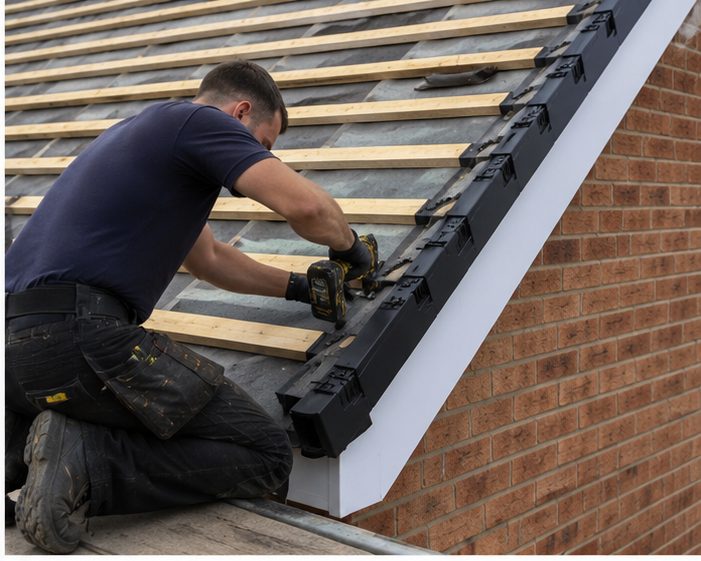
Dry verge
A dry verge uses mechanical fixings, so there is less to crumble. It is usually quicker to install, needs little upkeep and holds tiles down against wind. It is available in different colours and profiles and gives a clean line. The finish is more modern than a mortar verge, which may not suit every period home.
Wind and weather
South Wales roofs are exposed to strong winds, which makes secure edges important. A roof edge that is mechanically fixed has an advantage in gales, whereas a failing mortar bed is a common cause of tiles coming off at the verge.
Cost and maintenance
Mortar repairs can be cheaper initially, but they may need repeating. A dry verge may cost more at the start but usually needs little further work. Ask for both options to be priced so you can compare.
Appearance and character
For a period property in a conservation area, or with traditional features, a mortar verge may be the better match, and local planning rules can apply. For most modern and mid-century houses, a dry verge is a perfectly neat option.
We can advise after seeing the roof. See our Dry Verge Systems section or call 07766 547309.
Need a Roofer in South Wales?
Every roof is different — the fastest way to get an accurate answer is a quick chat with our team.