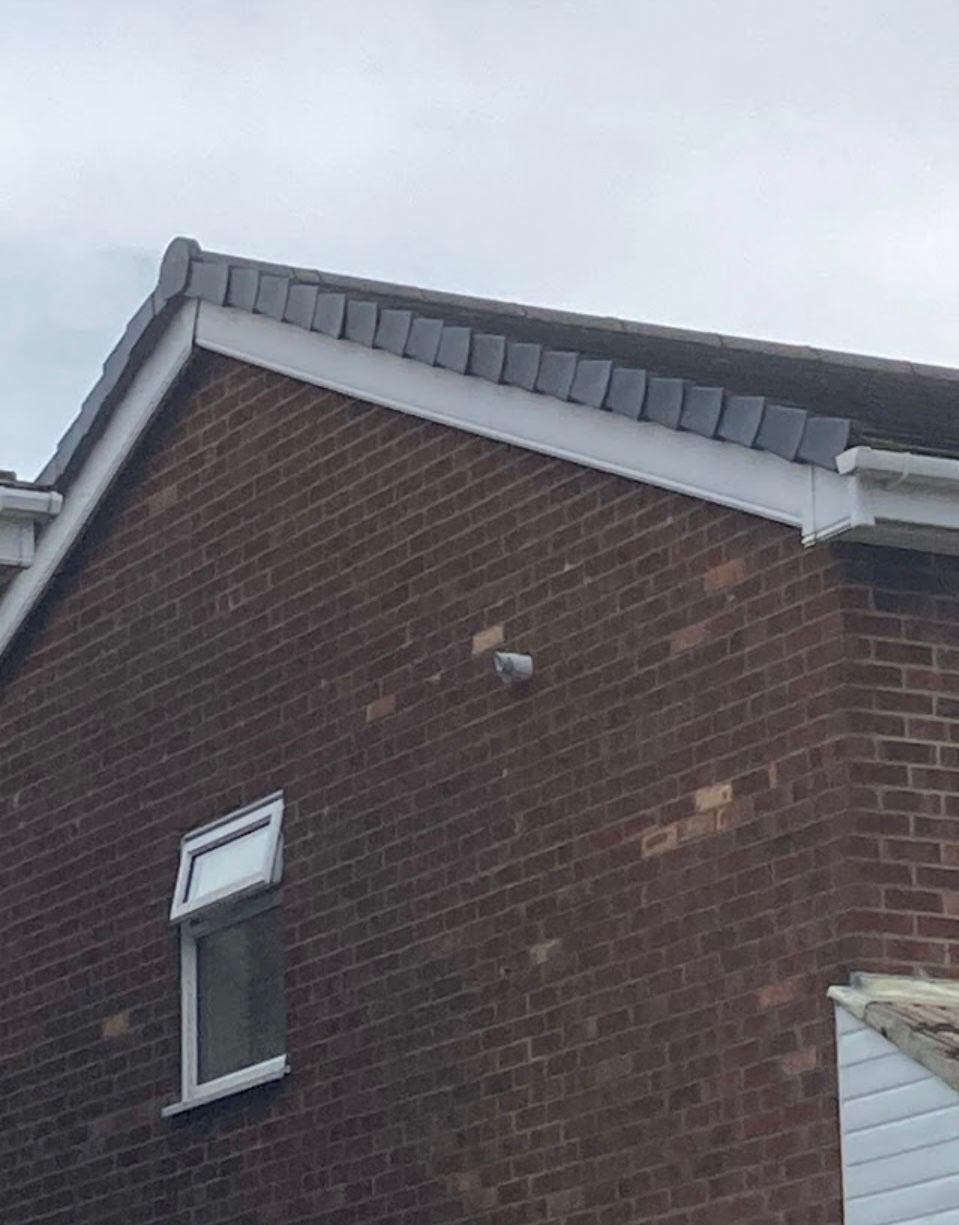
The verge is the sloping edge of a roof at a gable end. Traditionally, it was finished with a strip of mortar that held the last tiles in place and sealed the gap against the wall. A dry verge system does the same job without relying on mortar.
What it is
A dry verge system is made up of purpose-made units, usually in UPVC or similar material, that fit along the edge of the roof. They are fixed mechanically with screws or clips, and they hold the end tiles down and close the gap between the tiles and the gable wall. Verge trims, end caps and ventilated sections form a neat finish.
Why mortar fails
Mortar on a verge is exposed to wind, rain and frost. Over time it cracks, shrinks and crumbles, and pieces fall off. Once the bedding fails, the verge tiles can loosen and let wind lift them. Water can get into the roof edge and soak the timbers.
How a dry verge helps
Because the system is mechanically fixed, it does not depend on mortar staying in place. It holds the edge tiles down against the wind and keeps rain out. It also needs much less maintenance than a mortared verge, and the units are straightforward to replace if damaged. Some include a small amount of ventilation, which helps the roof space.
Appearance
Dry verge units come in several colours, often to match the tiles or the fascia, and they give a neat, consistent line along the edge.
Is it right for every roof?
Most roofs with gable ends can use one, but it should be fitted properly to the type of tile and the structure. We can look at your roof and advise.
See our Dry Verge Systems section or call 07766 547309 for a free quotation.
Need a Roofer in South Wales?
Every roof is different — the fastest way to get an accurate answer is a quick chat with our team.