Flat roofs have a reputation for needing replacing sooner than pitched ones. That reputation is partly deserved, but the covering you choose and how the roof is built and cared for make a big difference.
The covering matters
Traditional felt roofing is the cheapest to install but generally has the shortest life. Modern single-ply membranes such as EPDM rubber, and glass-reinforced plastic (GRP, often called fibreglass), are made to last longer when properly installed. There is no single number that applies to all roofs, because the result depends on the product, the workmanship and the conditions.
The deck and the build-up
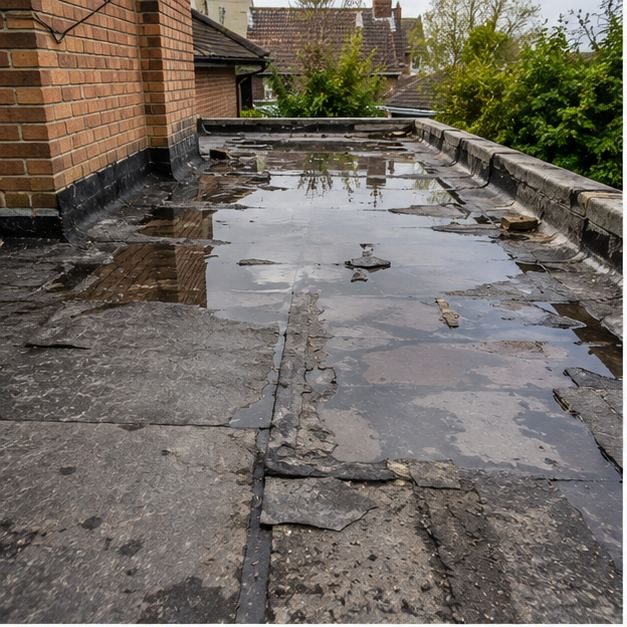
A new covering is only as good as the deck beneath it. Rotten boards, poor falls and missing insulation all shorten a roof's life. If water cannot drain away, it sits on the surface and puts constant stress on seams and edges.
Exposure
Roofs facing strong sun, wind and driving rain take more punishment, and those overhung by trees collect leaves and moisture. A flat roof on a South Wales coastal property can also suffer from wind lifting the edges if the trims are poorly fixed.
Maintenance
Clearing leaves and debris, keeping outlets and gutters free-flowing and checking the surface for blisters, cracks and ponding all help a roof last. Small repairs done early, such as a patched split or a re-sealed upstand, can stop water getting in.
Warning signs
Look for water stains on the ceiling below, pools of standing water that do not clear within a day or two, blistering, cracking or loose edges. These do not always mean replacement, but they do mean an inspection.
If you are wondering what your own flat roof needs, see our Flat Roofing section or call 07766 547309 for a free visit.
Need a Roofer in South Wales?
Every roof is different — the fastest way to get an accurate answer is a quick chat with our team.