Puddles on a flat roof are common, and after a heavy shower a little water is nothing to worry about. Water that is still sitting there days later is a different matter, and can lead to leaks and a shorter life for the covering.
Why ponding happens
A flat roof is not actually flat: it should be built with a slight fall towards the outlet or gutter so that water runs off. Ponding happens when the fall is too shallow, when the deck has sagged or the boards have warped, or when the outlet is blocked or too small. Sometimes an earlier repair has built up a ridge that holds water in.
Why it matters
Standing water puts constant weight on the roof and keeps the surface wet, which speeds the ageing of many coverings. It collects debris and algae, and it makes any tiny weakness more likely to let water through. In winter it can freeze and stress the surface.
What can be done
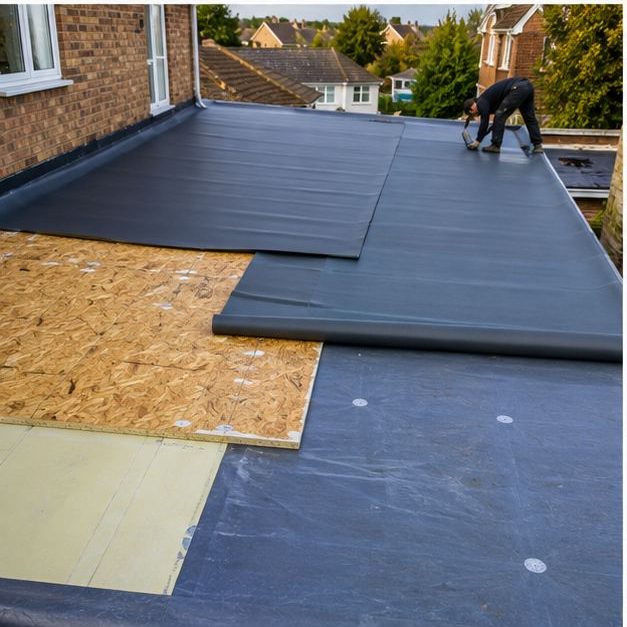
First, clear the outlets and gutters of leaves and debris, if you can do so safely from a window or a low roof. If the problem is minor, a roofer may be able to improve drainage with a new outlet or small adjustments. If the deck has sagged or the fall is poor, the proper fix is to renew the deck, or to lay a tapered insulation system that creates a better fall, and then recover the roof.
Do not ignore it
Take a photograph of the water after rain, and note how long it stays. This helps a roofer understand the problem. If the ceiling below is stained, get the roof looked at sooner.
For help, see our Flat Roofing section or call us on 07766 547309 for a free visit.
Need a Roofer in South Wales?
Every roof is different — the fastest way to get an accurate answer is a quick chat with our team.