Garages, rear extensions and porches are the most common homes for flat roofs. They are small, which makes replacement manageable, but a few decisions are worth thinking through before work begins.
Look at what is underneath
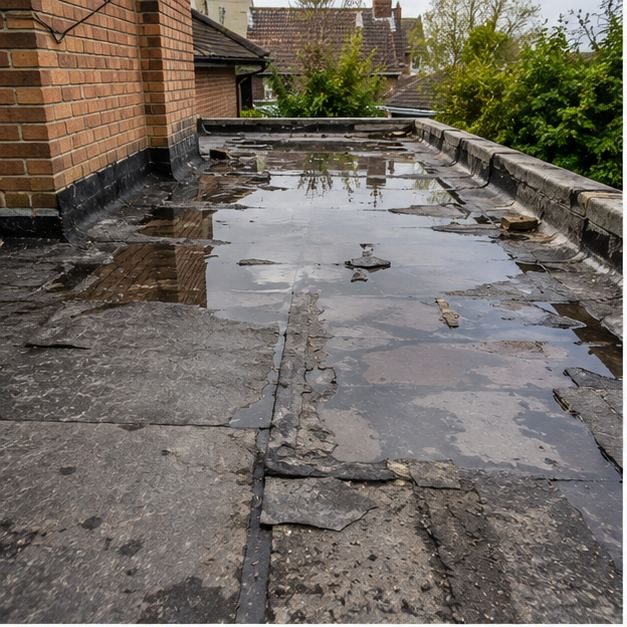
A new covering needs a sound base. Before anything is laid, the existing roof is checked for soft or damaged boards, and rotten timber is replaced. If the deck is wet, it is better to deal with the moisture and the source of the leak first than to cover it.
Consider insulation
Extensions that are lived in often need a warm roof, and replacing the covering is a good chance to add insulation. The way it is built up affects how the roof performs, and moisture needs to be managed. Garages may not need insulation, but it is worth asking if you plan to use the space as a workshop or for storage.
Edges, upstands and drainage
Failures often start at the edges. Trims need to be fixed firmly, upstands against walls need to be properly sealed and flashed, and water needs a clear route to the gutter or outlet. Check whether the existing gutters and downpipes are in good condition, and replace them if needed while access is there.
Choose the covering
EPDM, GRP and felt each suit different jobs, and the best choice depends on the shape and use of the roof. A simple rectangular garage roof suits a single EPDM sheet well, while a roof with many details may suit GRP.
Planning and regulations
Replacing like for like is often straightforward, but changing the build-up or adding insulation can raise building regulations questions, so ask your roofer.
See our Flat Roofing section or call 07766 547309 for a free quotation.
Need a Roofer in South Wales?
Every roof is different — the fastest way to get an accurate answer is a quick chat with our team.