

Dry Verge Systems › Neath
The verge is the roof edge at a gable end, and on most older Neath houses it was bedded in mortar. Mortar cracks, shrinks and drops out, leaving tiles loose at exactly the point where wind catches the roof hardest. You often notice it as crumbs of mortar in the garden or a gap you can see from the pavement.
A dry verge uses mechanically fixed verge units or trims and tile-ends or caps, with no wet mortar. It resists wind at the edge, has nothing to crack, and keeps weather, birds and insects out of the roof edge. It suits new roofs, re-roofs and repairs where mortar has already failed.
Call 07766 547309 about dry verge systems in Neath, or message us on WhatsApp.
Gable ends on Neath's terraces and estates
Many Victorian and Edwardian houses in Neath have gable ends or party-wall upstands where the old mortar verge has been patched more than once. The patches crack along the join with the tile, and rain runs in behind. A repaired strip of differently coloured mortar, visible from the street, is a good sign the edge is tired.
Interwar and post-war estates in Skewen, Bryncoch and Cimla often have concrete interlocking tiles with gable ends facing up the valley. The verge there is exposed to wind funnelled along the slopes. Mortar falling away on a concrete tile roof can leave the edge tile unsupported, and a dry verge gives it a proper mechanical fix.
Compatibility depends on the tile profile, so we never promise a system before seeing the roof. Some tile types take a standard dry verge unit neatly; older or unusual ones need checking. A dry verge also does not cure a roof that is failing elsewhere, and we say so if the wider covering is the real concern.
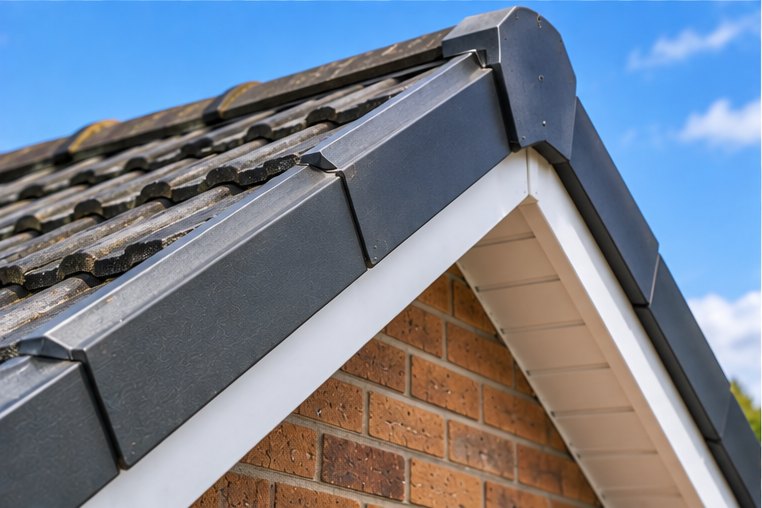
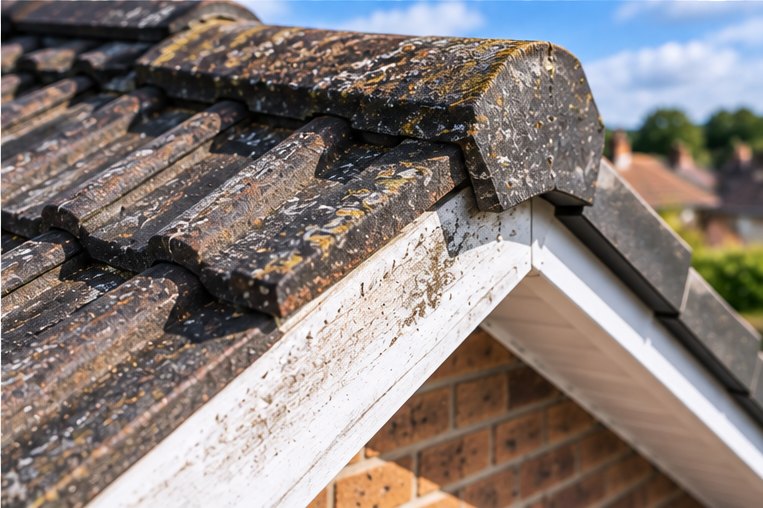
Dry verge work we do in Neath
- Replacing failed mortar verges — We remove loose and cracked mortar from a gable end and fit dry verge units fixed to the tile maker's guidance, so the edge is sound without wet bedding.
- Dry verge on a re-roof — When we strip and re-tile a Neath roof, we build the dry verge in as part of the new covering so the edges match the rest of the work.
- New-build and extension gables — Extensions and new gables get a dry verge from the start, which avoids a mortar edge that will need repair later on.
- Loose and missing edge tiles — Where the end tiles have slipped because the mortar gave way, we refix or replace them and secure the edge mechanically.
- Ridge-to-verge junctions — The corner where the ridge meets the verge is a weak spot, so we detail it carefully with the right ends and fixings for the tile profile.
- Sealing out birds and insects — Gaps in old verges let birds and insects into the roof edge, and a fitted dry verge closes that route without relying on mortar.
How we approach a dry verge here
We begin with a look at the gable ends from the ground, and note which tile profile you have, because that decides which verge units will fit. Access on terraced streets can be limited, so we plan where a scaffold or access platform can safely go. We explain what we see before any work is agreed.
On the day we remove the failed mortar, check the battens and end tiles beneath, and fit the dry verge to the tile maker's guidance. If we find rot or a wider fault, we tell you straight away rather than covering it over. The finish is a clean, fixed edge with no wet mortar to fail.
Dry Verge Systems Guides for Neath
Dry Verge Systems in Neath — Common Questions
Does a dry verge suit every house in Neath?
Not automatically. It depends on the tile profile and the condition of the edge battens, so we check on site before suggesting a system. Most common concrete and many clay tiles can take one, but older or unusual tiles need a closer look.
Why does the mortar on my gable end keep falling out?
Mortar shrinks and cracks with wind, rain and frost, and on an exposed valley-side gable it gets little rest. Once a gap opens, water gets behind it and pushes it out. A dry verge takes the mortar out of the equation.
Can a dry verge be added without re-roofing?
Often yes, where the main roof is otherwise sound. We take off the failed mortar and fit units at the edge only. It is not a cure for a roof that is failing elsewhere, so we tell you if the wider covering is the problem.
Does a dry verge help in high wind?
It helps. The verge units and end tiles are mechanically fixed, so the edge resists wind lift better than loose mortar does. Neath's valley sides funnel weather along the gables, so a fixed edge is worth having on exposed houses.
Will I need permission for the work?
Replacing a failed verge on an ordinary house is usually straightforward, but some jobs may need planning or Building Regulations checks — we advise before work starts. Tell us about the house and we will say what applies before anything is agreed.
More Roofing Help in Neath
Nearby Towns
Contact T&T Roofing in Neath
We cover Neath and the area around it including Skewen, Briton Ferry, Cimla, Tonna, Resolven.
Tell us what the roof is doing in Neath and we will look at it. Call 07766 547309, message us on WhatsApp or use the form below.